
Latest Sony Cinema Equipment in 2026: Professional Buying Guide
8/22/2026
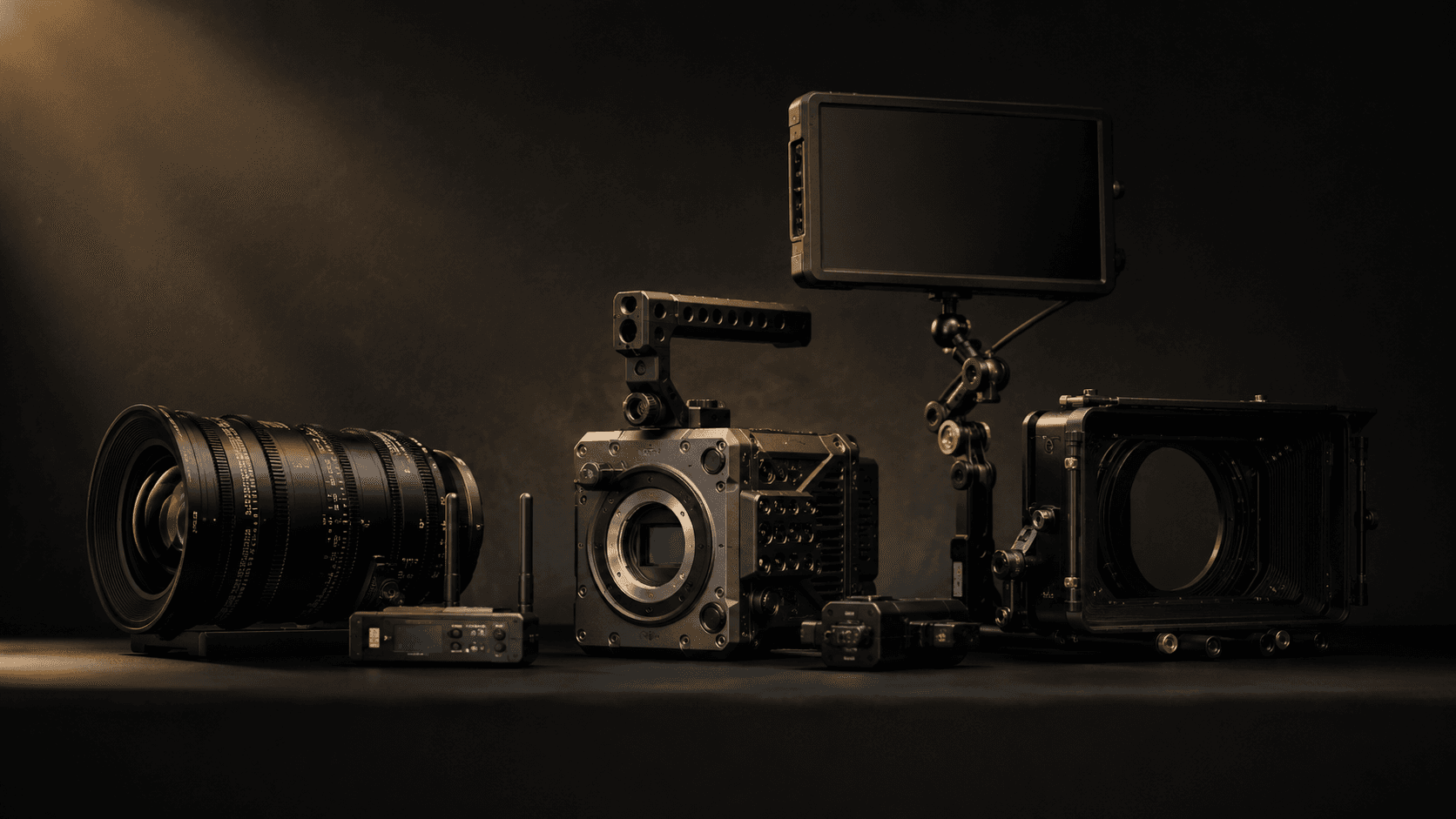
Choosing a Sony cinema camera is not about buying the most expensive body. The right choice depends on crew size, production type, delivery speed and post-production workflow.
This concise guide explains where the FX2, FX3, FX5, FX6 and BURANO fit.
Quick answer
• Solo and lightweight production: FX3 or FX2
• Professional industrial and commercial work: FX5 or FX6
• High-end cinema production: BURANO
• Fast delivery with limited grading: S-Cinetone
• Maximum grading flexibility: S-Log3 or X-OCN on a supported camera
Sony FX2: hybrid flexibility
The FX2 suits creators who need both professional video and still photography. Its integrated viewfinder, intelligent autofocus and compact body are useful for documentary, interview and corporate work.
Its main strength is flexibility. For long recording days, however, power, audio and rigging should be planned in advance.
Best for:
• Solo operators
• Documentary and behind-the-scenes work
• Hybrid photo and video assignments
Sony FX3: compact and proven
The FX3 remains a strong option for gimbals, vehicles, confined spaces and small crews. Its compact body, low-light performance and E-mount compatibility make it useful as either a lightweight main camera or a B-camera.
The lack of internal ND is its main practical limitation. Exterior work requires quality ND filters or a suitable matte box.
Best for:
• Gimbal shots
• Vehicle and machinery interiors
• Travel and documentary filming

Choose camera, lenses, audio and media as one production ecosystem.
Sony FX5: a new professional balance
The FX5 sits between compact bodies and full professional cinema systems. Its full-frame stacked sensor, intelligent processing, variable ND and X-OCN recording make it attractive for commercial, documentary and industrial productions.
Open Gate, in supported modes, helps when one shoot must deliver both horizontal and vertical formats. Always verify the installed firmware and the official guide before planning around a particular frame rate because some announced features may be scheduled for a future update.
Best for:
• Industrial and commercial films
• Multi-format social and web delivery
• Projects needing internal ND and compressed RAW
Sony FX6: a reliable professional tool
The FX6 remains highly practical for documentary, broadcast and commercial work because of its ergonomics, internal variable ND, professional connections and established workflow.
When production speed, professional audio and reliability matter more than owning the newest feature set, the FX6 is still a powerful choice. Its body is generally more production-ready for shoulder work and long shooting days than smaller cameras.
Best for:
• Long interviews and documentary work
• Multi-camera production
• Crews requiring SDI and timecode
Sony BURANO: high-end cinema production
BURANO is designed for projects that need high resolution, broad dynamic range and a serious cinema post-production workflow. It sits between the compact Cinema Line and VENICE.
The real cost is not limited to the body. Lenses, media, storage, camera crew and post-production time must also be included.
Best for:
• Films and series
• High-end commercials
• Productions with DIT and professional color grading
Practical comparison
FX2 and FX3 are lighter and faster. FX5 creates a modern balance between size and cinema features. FX6 is established and dependable. BURANO is valuable when a project can genuinely benefit from its image quality and workflow.
For a factory film, FX5 or FX6 is often more practical than BURANO. For a gimbal or a tight vehicle interior, FX3 may perform better. A common efficient combination is FX5 or FX6 as the A-camera and FX3 as the B-camera.
Lens selection
A 24–70mm standard zoom covers most general shots. A 70–200mm is useful for distant details, safe working distance and compressed perspective. A 16–35mm helps with factory halls, architecture and tight spaces.
A macro lens is valuable for products and small components. A probe lens can create unusual views inside machinery. Choose focal length according to safety distance, lighting and movement—not only shallow depth of field.
Audio, monitoring and media
Strong pictures do not compensate for damaged audio. For interviews, recording a lavalier and boom simultaneously provides useful redundancy. Closed headphones, spare cables and room tone are essential.
Calculate codec and daily storage requirements before production. Create at least two verified backups and do not format camera cards until the copies have been checked.
Camera selection checklist
• Is delivery horizontal, vertical or both?
• How long will continuous recording last?
• Is internal ND required?
• Are SDI and timecode necessary?
• Will the project receive professional grading?
• What are the storage and backup requirements?
• Will the camera work on a gimbal, vehicle or shoulder rig?
Conclusion
The best Sony cinema camera is not the one with the largest specifications. It is the camera that works quickly, reliably and appropriately for the intended deliverables.
FX3 or FX2 suits lightweight crews, FX5 or FX6 suits professional commercial work, and BURANO fits high-end cinema production. Test the camera together with the actual lenses, media, audio equipment and post-production workflow before making the final decision.
Related pages
Sayyahi portfolio
Industrial film production
Aerial filming
Project estimate
More production guides
«Camera choice should account for lenses, audio, media and delivery as one system.»
Key decisions at a glance
• Define delivery, turnaround and post-production capacity before choosing tools.
• Test settings under real lighting, local power frequency and movement.
• A stable repeatable workflow is more valuable than maximum specifications.
Frequently asked questions
Is there one setup for every project?
No. Interviews, industrial films, slow motion and fast delivery require different choices in color profile, codec, focus and media.
What is the most useful pre-production test?
Record, edit and grade a representative scene with the intended light, lens, codec and delivery path before the main shoot.
Related reading
• Sony Cinema Line: from FX3 & FX30 to FX6
• Full-frame or Super35? A sensor guide
• Prime or zoom lens? Which fits your project?
«If your project needs integrated planning, production and post, the following paths are a useful starting point.»
• Industrial promo film production
• Request a project estimate
Related articles
Sony Cinema Line: from FX3 & FX30 to FX6
Why Sony’s compact FX bodies became a first choice for independent filmmakers.
Canon Cinema EOS: Canon’s beloved color, in cinema form
Why many filmmakers still love Canon’s color science and skin tones.
Full-frame or Super35? A sensor guide
How sensor size affects depth of field, low light and the feel of an image.